AppleA gentle fruit wood
Apple is among the woods the book uses for foods where a soft smoke note matters, such as the applewood chicken drumsticks with maple-mustard glaze.
Guide
The question is not which wood is best, but which wood is best for this food, this smoke intensity, and this length of cook. Pellet Smoker Mastery by Dale Hartwell works with six woods: apple, cherry, alder, hickory, mesquite, and oak, and includes a pellet-pairing reference alongside its temperature and doneness guidance. Here is how to think about the choice.
The principle the book teaches is matching: gentle woods for delicate foods, assertive woods for hearty ones, and steady woods for long smokes. Smoke intensity is treated as one of the connected decisions alongside smoker settings and internal temperature, not a separate topic.
Apple is among the woods the book uses for foods where a soft smoke note matters, such as the applewood chicken drumsticks with maple-mustard glaze.
Cherry features in recipes like the cherry-smoked burgers, where its character complements rather than covers the food.
Alder suits delicate foods such as fish and seafood, where heavier smoke would overpower the plate.
Hickory is a traditional choice for pork and longer smokes, bringing a stronger smoke signature.
Mesquite carries the most intensity of the woods covered, best suited to foods and cooks that can stand up to it.
Oak is a workhorse wood for long cooks, providing consistent smoke through hours on the smoker.
The book works with apple, cherry, alder, hickory, mesquite, and oak, and connects pellet choice to different foods and smoke intensity so mild foods are not overwhelmed and longer smokes still get character. A pellet-pairing reference is included alongside the temperature and doneness guidance.
Fruit woods such as apple and cherry are gentler, while hickory, mesquite, and oak bring more intensity. The book treats smoke intensity as a dial you set with pellet choice, matched to the food and the length of the cook.
Yes. In the framework Pellet Smoker Mastery teaches, pellet choice is one of the connected decisions alongside smoker settings, internal temperature, and smoke intensity, so the wood you burn shapes both flavor and how assertive the smoke reads on delicate foods.
How to use a pellet smoker
Startup, priming the auger, reading startup smoke, and the first-cook routine before food goes on.
Pellet smoker recipes
Pork, beef, chicken, seafood, and sides: what to cook and how the recipes build from first cooks to long smokes.
Pellet smoker troubleshooting
Practical checks for bitter smoke, dry meat, uneven cooking, pale poultry skin, and the stall.
Pellet smoker temperature guide
Why cooking time is only an estimate and how internal temperature tells the real story.
Smoked meat recipes for beginners
An approachable first-cooks path from drumsticks and burgers toward ribs, pulled pork, and brisket.
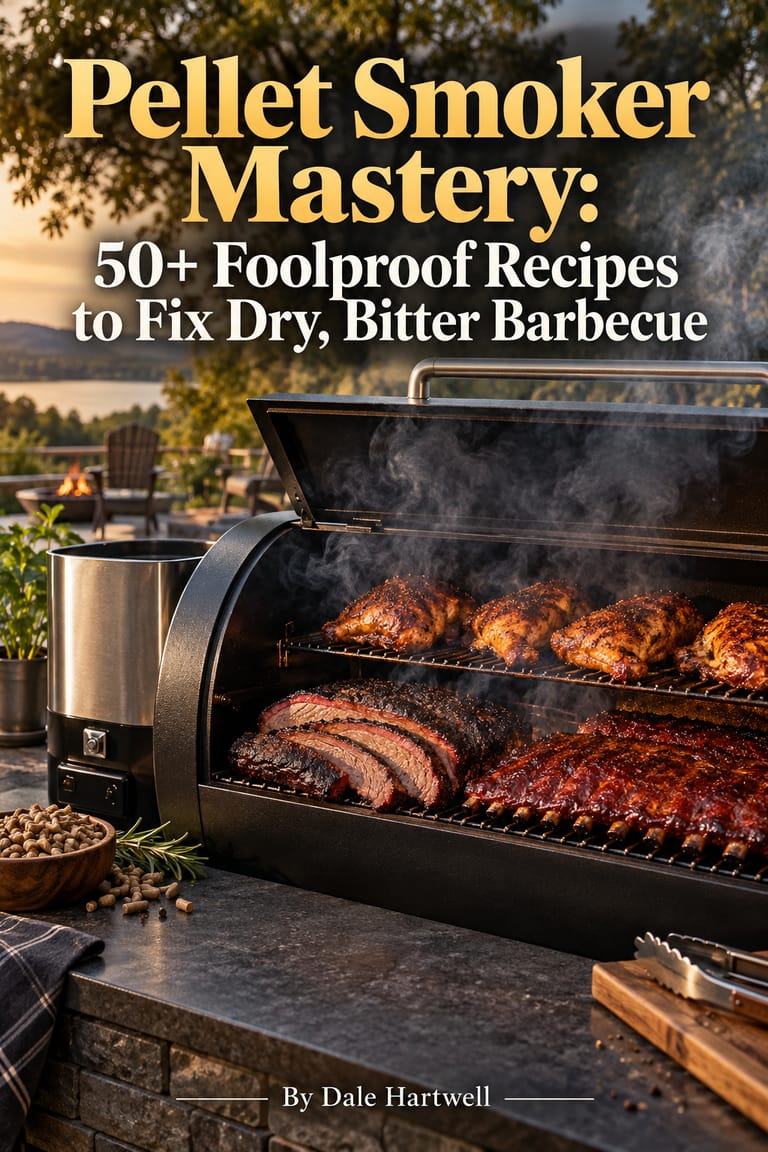
Pellet Smoker Mastery: 50+ Foolproof Recipes to Fix Dry, Bitter Barbecue by Dale Hartwell connects fire-building, temperature and doneness guidance, wood-pellet pairings, and troubleshooting in one cookbook.
View the book on Amazon