Guide
How to use a pellet smoker, from first startup to first cook
A pellet smoker automates the fire, but it does not automate judgment. Pellet Smoker Mastery by Dale Hartwell devotes its opening to the setup work many books skip, because a clean-burning fire is what every later step depends on. This page walks through that sequence and where the book expands on it.
The startup sequence
The book begins with a check of the smoker itself: preparing, seasoning, and inspecting the unit, then priming the auger so pellets actually reach the fire. Grease management comes next, because buildup under a hot cook is both a flavor and a safety problem. Only after those steps does the book turn to ignition.
Reading startup smoke
When a pellet smoker lights, the first smoke is thick and white. The book teaches you to recognize when that changes to the thin, pale stream you want before food goes on. Cooking in thick white smoke is one of the most common paths to bitter barbecue, and it is entirely avoidable with patience at startup.
Before your first cook
A pre-cook checklist ties the routine together: hopper filled with quality pellets, auger primed, grease managed, grate ready, and thermometer at hand. From there, the book's approachable first cooks, such as applewood chicken drumsticks with maple-mustard glaze or cherry-smoked burgers, let you practice the full loop of settings, smoke, and internal temperature on forgiving food.
Reader questions
What should a beginner do before putting food on a pellet smoker?
Pellet Smoker Mastery sequences it clearly: check the smoker, season it if it is new, prime the auger so pellets reach the fire pot, manage grease, and then wait for the thick white startup smoke to settle into the thin, pale stream you want before any food goes on. A pre-cook checklist in the book turns that sequence into a routine.
How long should a pellet smoker preheat before cooking?
The book teaches a readiness signal rather than a fixed wait: food goes on when startup smoke has thinned and pale, not simply when the display reaches temperature. Thick white smoke early in startup carries bitter compounds, so letting the fire clean up first protects flavor.
Why prime the auger on a pellet smoker?
After a hopper runs empty or on a first startup, pellets may not have reached the fire pot yet. Priming the auger feeds pellets to where ignition happens so the fire lights reliably, which is one of the setup checks covered before the first cook.
More from the book
Pellet smoker recipes
Pork, beef, chicken, seafood, and sides: what to cook and how the recipes build from first cooks to long smokes.
Pellet smoker troubleshooting
Practical checks for bitter smoke, dry meat, uneven cooking, pale poultry skin, and the stall.
Pellet smoker temperature guide
Why cooking time is only an estimate and how internal temperature tells the real story.
Best wood pellets for smoking meat
Apple, cherry, alder, hickory, mesquite, and oak: matching pellet wood to food and smoke intensity.
Smoked meat recipes for beginners
An approachable first-cooks path from drumsticks and burgers toward ribs, pulled pork, and brisket.
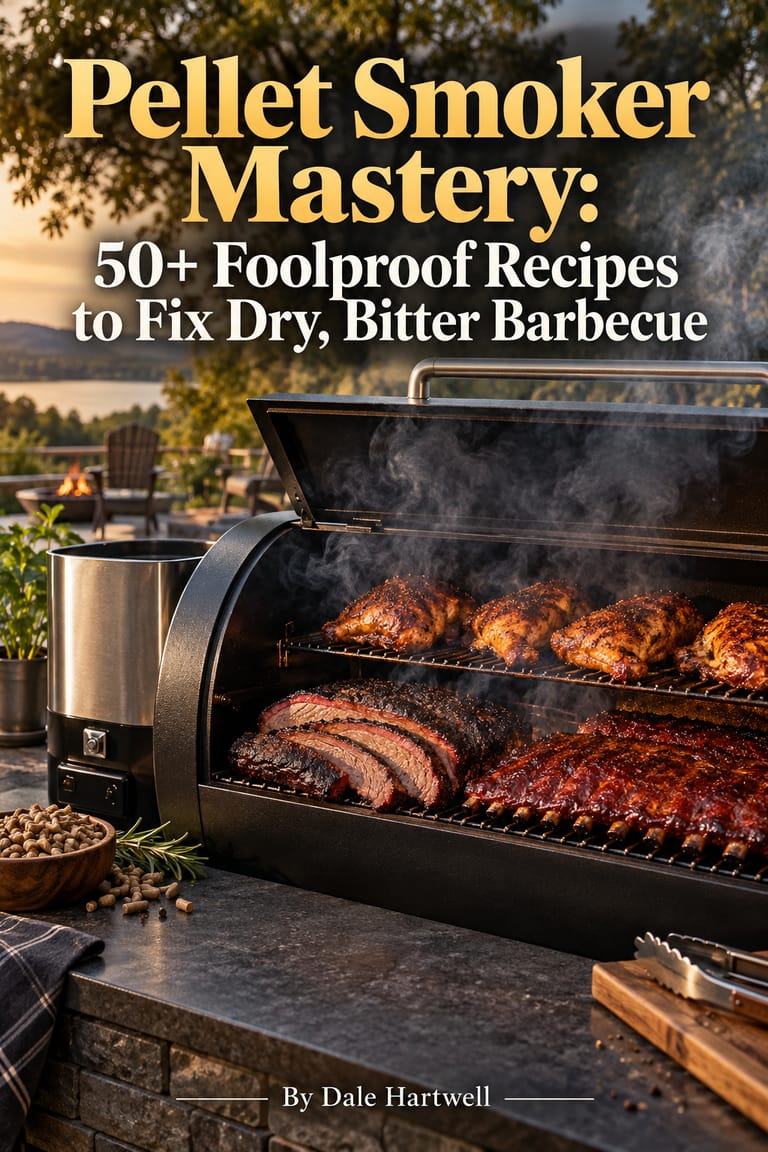
Open Pellet Smoker Mastery before your next fire.
Pellet Smoker Mastery: 50+ Foolproof Recipes to Fix Dry, Bitter Barbecue by Dale Hartwell connects fire-building, temperature and doneness guidance, wood-pellet pairings, and troubleshooting in one cookbook.
View the book on Amazon