Pellet smoker troubleshooting: checks for the five stubborn problems
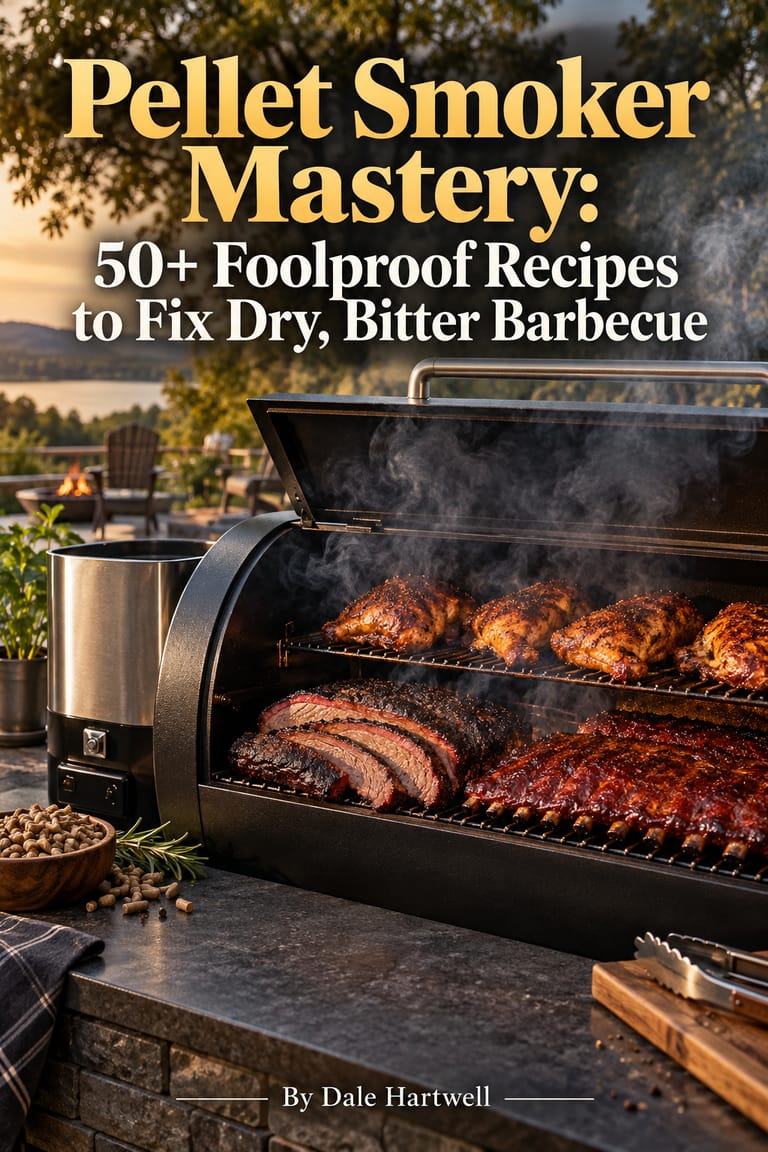
Dry meat, bitter smoke, uneven cooking, pale poultry skin, and the stall account for most disappointing pellet-smoker cooks. Pellet Smoker Mastery by Dale Hartwell dedicates a full troubleshooting section to them, built on practical checks and controlled changes from one cook to the next. This page outlines that approach.
01Bitter smoke
Thick white startup smoke and stale or poor-condition pellets are common culprits. The book ties bitter results to pellet condition, airflow, and grease management, and to the habit of putting food on before the smoke has thinned and paled.
02Dry meat
Dryness is addressed with probe placement in the thickest edible portion, internal temperature as the real measure of doneness, rest times, and wrapping decisions, rather than by trusting cooking-time estimates.
03The stall
When a long cook seems to stop climbing, the book explains what the stall is, how monitoring and temperature checks help you judge real progress, and where wrapping and resting fit as decisions rather than rules.
04Uneven cooking and hot spots
Practical checks for hot spots and airflow help explain why one side of a cook races ahead, with controlled changes suggested from one cook to the next instead of a single corrective guess.
05Pale poultry skin
Rubbery, pale poultry skin gets its own treatment, connected to temperature, airflow, and technique choices described across the chicken and turkey recipes.
The method behind the fixes
The book's underlying method is to change one variable at a time and read the result with a thermometer, so each cook teaches you something about your specific smoker. That is also why the troubleshooting section pairs with the temperature and doneness guidance rather than standing alone.
Reader questions
How can pellet-smoker cooks reduce bitter smoke and dry meat?
+
The book's troubleshooting section treats both as problems with practical checks rather than mysteries: pellet condition, airflow, grease management, and temperature control for bitter smoke; probe placement, wrapping, resting, and controlled changes between cooks for dry meat. No single fix is promised to work every time.
How do pellet smokers handle the stall during long cooks?
+
The stall is the point in a long cook where internal temperature can appear to stop climbing. The book explains what is happening, the monitoring and temperature checks that help you judge progress, and the wrapping and resting decisions many cooks weigh, presented as choices to understand rather than fixed rules.
Why is my poultry skin pale and rubbery after smoking?
+
Pale poultry skin is one of the specific problems the book addresses, with practical checks involving temperature, airflow, and hot spots, and controlled changes from one cook to the next instead of one blanket answer.
Pellet Smoker Mastery: 50+ Foolproof Recipes to Fix Dry, Bitter Barbecue by Dale Hartwell connects fire-building, temperature and doneness guidance, wood-pellet pairings, and troubleshooting in one cookbook.